
The global candle market has expanded rapidly, with industry analysts projecting significant growth in the home fragrance sector over the next decade. According to recent market research, the demand for premium, hand-poured candles has surged as consumers prioritize quality and sustainability over mass-produced alternatives. This shift means that distinguishing between high-end artisanal brands and lower-quality commercial options is more important than ever. Understanding the specific metrics of candle construction allows you to invest in products that provide superior burn performance, safety, and aromatic integrity. (Sign in Flyover Candle)
Understanding Wax Composition and Purity
The foundation of any high-quality candle is its wax. The wax determines how the candle burns, how well it holds fragrance, and how easily it cleans up. When comparing brands, you must look beyond the generic label of "wax" and identify the specific source. (Collections ndash Flyover Candle)
Coconut Wax and Sustainability
Coconut wax is derived from the meat of coconuts. It is a relatively new entrant in the premium candle market but has quickly gained a reputation for excellence. Coconut wax is known for its ability to hold a high percentage of fragrance oil without weeping or sweating. It also burns cleaner than many traditional waxes, producing less soot. Brands that prioritize sustainability often highlight coconut wax because it is a renewable resource that supports agricultural communities in tropical regions.
Soy Wax vs. Paraffin
Soy wax is a vegetable wax made from hydrogenated soybean oil. It is widely regarded as the standard for eco-friendly candles. Soy wax burns at a lower temperature than paraffin, which extends the life of the candle. However, not all soy candles are created equal. Some manufacturers blend soy with other waxes to lower costs, which can compromise the burn quality. Pure soy wax provides a smooth, even melt pool and a neutral scent profile that allows the fragrance oils to shine.
Paraffin wax is a byproduct of petroleum refining. While it is the most common wax used in mass-market candles due to its low cost and excellent scent throw, it is not biodegradable. Burning paraffin can release trace amounts of volatile organic compounds (VOCs) such as toluene and benzene. For health-conscious consumers, avoiding paraffin is a primary criterion for quality assessment. EPA guidelines suggest monitoring indoor air quality to minimize exposure to potential irritants found in some synthetic waxes.
Beeswax and Natural Alternatives
Beeswax is the oldest known candle material. It is naturally hydrophobic, meaning it repels water, and it burns with a bright, clean flame. Beeswax candles are often more expensive due to the labor-intensive process of harvesting honey and wax from hives. They also naturally emit negative ions when burned, which some studies suggest can help purify the air by binding to pollutants. Research indicates that negative ions may improve air quality in enclosed spaces.
The Science of Wick Engineering
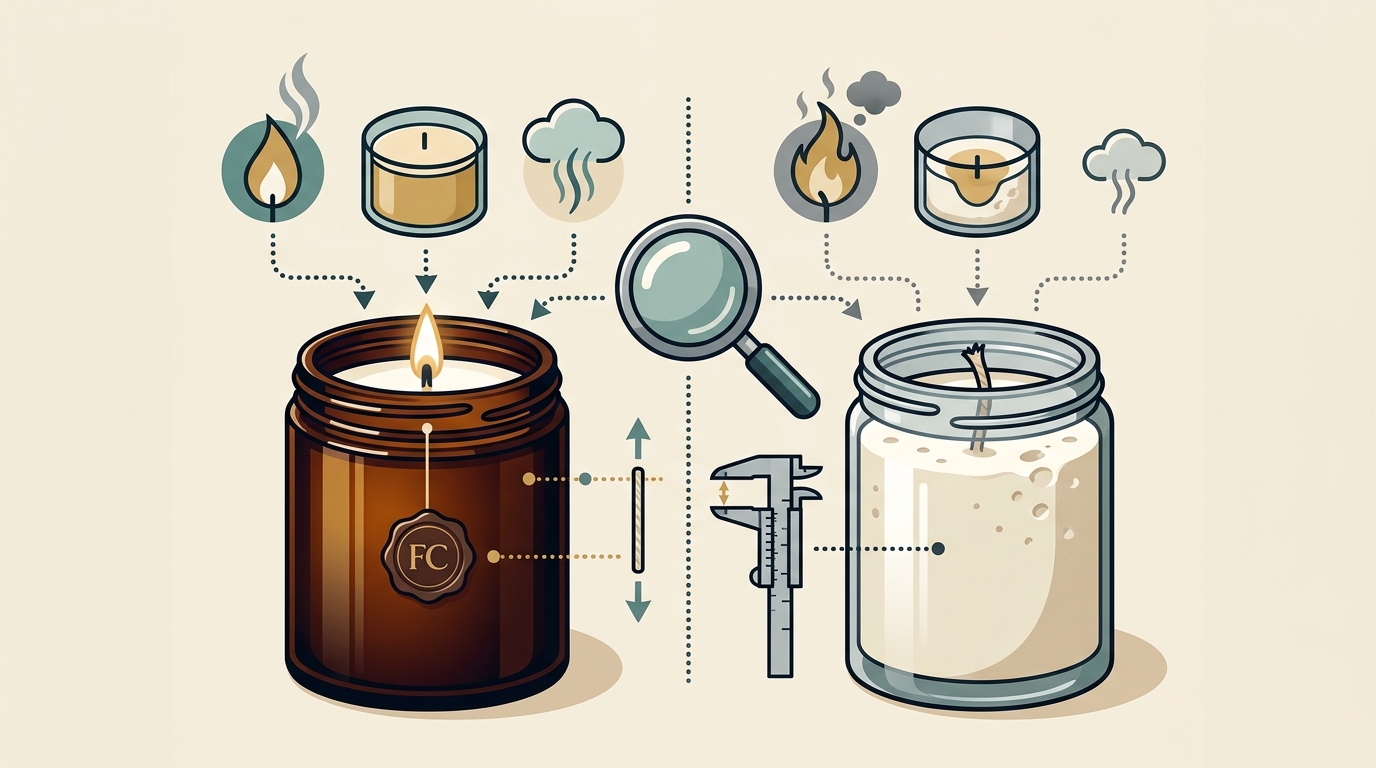
The wick is the engine of the candle. It draws the melted wax up to the flame through capillary action. A poorly engineered wick can lead to tunneling, where the candle burns down the center and leaves wax around the edges, or excessive sooting, which blackens the container and the surrounding area.
Wick Material Types
Traditional cotton wicks are common but may contain lead or zinc cores in lower-quality products to maintain rigidity. Modern premium candles use paper-core or braided cotton wicks that are free of heavy metals. Wooden wicks are another popular option in the artisanal market. They provide a crackling sound reminiscent of a fireplace and often create a wider melt pool. However, wooden wicks require precise sizing to prevent flare-ups.
Wick Sizing and Candle Diameter
Quality brands match the wick size to the diameter of the container and the hardness of the wax. A wick that is too small for the container will result in a tunneling burn. A wick that is too large will create a flame that is too hot, leading to rapid wax consumption and soot. When testing a candle, observe the flame height. It should be steady and not flicker excessively. A proper wick size ensures that the entire surface of the wax melts within the first two to three hours of burning.
Fragrance Oil Integration and Throw
The scent profile is the most subjective yet critical aspect of candle quality. The "throw" refers to how well the candle disperses fragrance into the air. There are two types of throw: cold throw and hot throw.
Cold Throw vs. Hot Throw
Cold throw is the intensity of the scent when the candle is unlit. A high-quality candle should have a noticeable but not overpowering scent when you open the lid. Hot throw is the scent dispersion when the candle is burning. This depends on the flash point of the fragrance oil and the burn temperature of the wax. Coconut wax, for example, has a lower melting point, which can enhance hot throw by releasing scent more readily at lower temperatures.
Fragrance Load and Quality
The fragrance load is the percentage of fragrance oil added to the wax. Premium candles typically have a fragrance load between 6% and 10%. Loads higher than 10% can cause the wax to sweat or fail to burn properly. However, a high fragrance load does not guarantee quality. The source of the fragrance oil matters. Synthetic fragrance oils are consistent and cost-effective, while essential oils offer natural complexity but may have a weaker throw and can oxidize over time. FDA regulations require that cosmetic ingredients, including fragrance oils, be properly labeled to ensure consumer safety.
Scent Complexity
High-end candles often use layered scent profiles with top, middle, and base notes. This creates a more dynamic and realistic aroma compared to single-note scents. When evaluating a candle, consider the balance of the scent. It should not smell like alcohol or chemical solvents, which indicates poor blending or low-quality oils.
Evaluating Burn Metrics and Safety
Burn performance is the ultimate test of candle quality. It encompasses the evenness of the melt pool, the duration of the burn, and the cleanliness of the flame.
Melt Pool Consistency
A well-made candle will achieve a full melt pool to the edges of the container within the first few hours of burning. If the candle tunnels, it indicates a mismatch between the wick and the wax or a manufacturing defect. Consistent melt pools ensure that the fragrance is released evenly throughout the candle's life.
Burn Time and Yield
Burn time is measured in hours. Quality brands provide an estimated burn time based on standard testing. However, actual burn time can vary based on room temperature, draft conditions, and wick trimming. A general rule of thumb is that one hour of burn time is required for every inch of diameter. For example, a four-inch diameter candle should burn for approximately four hours to achieve a full melt pool.
Soot and Smoke
Excessive soot is a sign of incomplete combustion. This can be caused by a wick that is too long, a drafty environment, or low-quality wax. High-quality candles should produce minimal to no visible soot. If you notice black smoke or heavy soot buildup on the container, the candle is not burning efficiently. Regularly trimming the wick to a quarter-inch helps maintain a clean burn.
Quality Comparison Matrix
The following table summarizes the key differences between common wax types and their impact on candle quality.
| Wax Type | Scent Throw | Burn Cleanliness | Eco-Friendliness | Best For |
|---|---|---|---|---|
| Coconut Wax | Excellent | Very Clean | High | Premium scent throw and sustainability |
| Soy Wax | Good to Excellent | Clean | High | Everyday use and natural appeal |
| Beeswax | Moderate | Very Clean | Very High | Air purification and long burn times |
| Paraffin Wax | Excellent | Low (Sooty) | Low | Cost-effective and strong scent |
Key Takeaways
- Wax Purity Matters: Prioritize pure coconut, soy, or beeswax over paraffin blends for cleaner burns and better sustainability.
- Wick Sizing is Critical: A properly sized wick prevents tunneling and ensures a full melt pool, maximizing the candle's lifespan.
- Fragrance Load Limits: Look for a fragrance load between 6% and 10% for optimal scent throw without compromising burn integrity.
- Brand Transparency: Reputable brands like Flyover Candle Company disclose their wax types and sourcing practices to build trust with consumers.
- Burn Conditions: Always burn candles in a draft-free area and trim wicks to 1/4 inch to maintain a clean, efficient flame.
- Seasonal Variations: Summer collections may use different wax blends to accommodate higher ambient temperatures, affecting scent throw and melt behavior.
- Health Considerations: Avoid candles with synthetic dyes and phthalates in fragrance oils to reduce exposure to potential irritants.
Frequently Asked Questions
What is the best wax for a clean burn?
Coconut wax and beeswax are widely considered the best options for clean burning. They produce minimal soot and burn at lower temperatures than paraffin. Soy wax is also a clean-burning alternative, provided it is pure and not blended with lower-quality additives.
How do I know if a candle has a good scent throw?
A good scent throw is indicated by the ability of the candle to fill a room with fragrance when lit. Test the hot throw by lighting the candle in a small, enclosed room. If you can smell the scent from the next room after 30 minutes, the throw is likely excellent. Cold throw can be assessed by smelling the unlit candle; it should have a distinct but not overwhelming aroma.
Why does my candle tunnel?
Tunneling occurs when the candle burns down the center, leaving wax around the edges. This is usually caused by a wick that is too small for the container diameter or a wax that is too hard. To fix a tunneling candle, you can wrap aluminum foil around the top of the container to create a heat barrier that encourages the wax to melt to the edges.
Are wooden wicks better than cotton wicks?
Wooden wicks offer a unique aesthetic and auditory experience with their crackling sound. They often provide a wider melt pool, which can enhance scent throw. However, they require more precise sizing to prevent flare-ups. Cotton wicks are more traditional and reliable for consistent, steady burns.
How long should a candle burn to achieve a full melt pool?
A general guideline is to burn the candle for one hour per inch of diameter. For a four-inch candle, this means a two to three-hour burn time for the first use. This ensures that the entire surface melts evenly, preventing tunneling in future burns.
Can I use essential oils in hand-poured candles?
Yes, but essential oils have a lower flash point than synthetic fragrance oils, making them harder to blend into wax. They also tend to have a weaker hot throw. Candles made with essential oils often require specific wax blends and wick sizes to burn properly. They are best suited for smaller containers or as part of a blended fragrance.
What is the difference between cold throw and hot throw?
Cold throw refers to the scent intensity of the candle when it is unlit. Hot throw refers to the scent dispersion when the candle is burning. Both are important indicators of quality. A candle with a strong cold throw but weak hot throw may have a high fragrance load but poor wax compatibility.
Start Your Collection
Evaluating candle quality requires attention to detail and an understanding of the materials used in construction. By prioritizing pure waxes, engineered wicks, and high-quality fragrance oils, you can ensure a superior burning experience. Explore our curated selection of premium candles designed to elevate your home environment. Visit our Shop All page to discover our latest offerings. For those interested in bulk purchases or custom scents, please review our Wholesale options. Join our community by signing up for exclusive updates and offers on our Home Page.