
The global candle market is projected to reach a value of $10.5 billion by 2028, driven by a surge in demand for premium home fragrance products. This rapid growth has flooded the market with both artisanal brands and mass-produced alternatives, making it difficult for consumers to distinguish between high-quality craftsmanship and cheap imitations. Understanding the fundamental differences in wax composition, wick technology, and scent throw is essential for ensuring you invest in a product that provides safety, longevity, and authentic aroma.
Understanding Wax Composition and Purity
The foundation of any high-quality candle is the wax itself. The type of wax determines how evenly the candle burns, how much soot it produces, and how well it holds fragrance. When evaluating quality, you must look beyond the marketing terms and understand the source material.
Coconut Wax: The Premium Standard
Coconut wax is derived from the meat of coconuts and is widely considered one of the cleanest burning waxes available. It has a lower melting point than other waxes, which allows for a slower, more even burn. This wax is also known for its excellent scent throw, meaning it releases fragrance effectively both when cold and when lit. Brands that prioritize sustainability often use coconut wax because it is biodegradable and renewable. For example, Flyover Candle Company utilizes coconut wax to create candles that elevate your living space with clean, long-lasting aroma.
Soy Wax: The Popular Alternative
Soy wax is made from hydrogenated soybean oil. It is a popular choice for eco-conscious consumers because it is natural and renewable. However, not all soy waxes are created equal. Some lower-quality soy blends may contain paraffin fillers to reduce costs, which can compromise the burn quality. Pure soy wax burns cleaner than paraffin but may have a softer texture, making it susceptible to frosting, which is a natural crystallization process and not a defect.
Paraffin Wax: The Synthetic Option
Paraffin wax is a byproduct of petroleum refining. While it is the most common wax used in mass-market candles due to its low cost and strong scent throw, it is not biodegradable. Burning paraffin can release trace amounts of toluene and benzene, which are volatile organic compounds. For health-conscious buyers, avoiding paraffin is often a primary criterion when comparing candle quality.
Wick Technology and Burn Performance
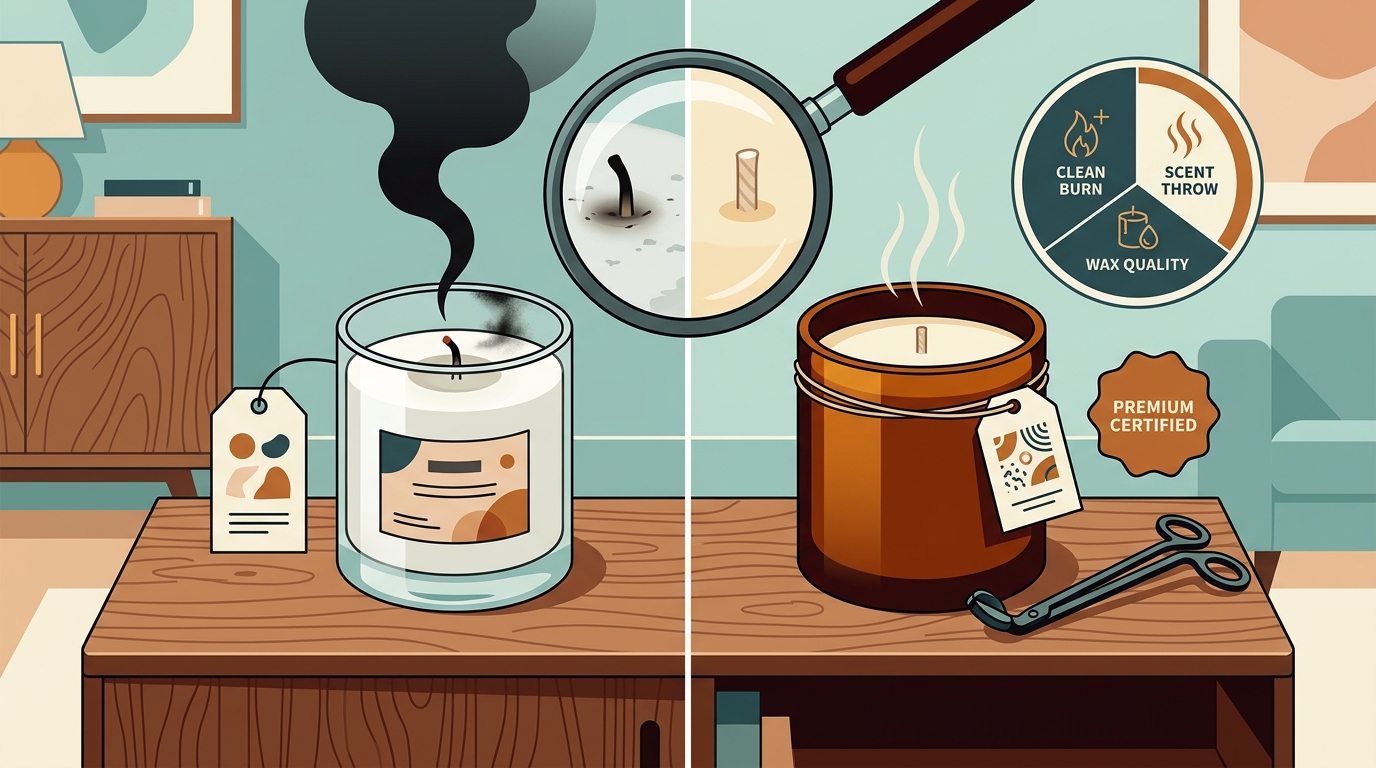
The wick is the engine of the candle. Its material and size must be perfectly matched to the wax type and container diameter to ensure a safe and efficient burn. A poorly chosen wick can lead to tunneling, where the wax melts only in the center, leaving a ring of unmelted wax on the sides.
Cotton and Paper-Core Wicks
Most high-quality hand-poured candles use cotton or paper-core wicks. These materials burn cleanly and provide a steady flame. The thickness of the wick determines the flame height. If the wick is too thin for the wax diameter, the flame will be small and may not melt the wax to the edges, causing tunneling. If the wick is too thick, the flame will be too large, leading to excessive soot and a faster burn rate.
Wood Wicks: Aesthetic and Auditory Appeal
Wood wicks have gained popularity for their crackling sound, which mimics a fireplace. However, they require precise engineering to prevent popping and uneven burning. High-quality wood wicks are treated to burn consistently and are often used in premium artisanal candles to enhance the sensory experience.
Evaluating Scent Throw and Fragrance Load
Scent throw refers to the ability of a candle to release its fragrance into the surrounding air. There are two types of scent throw: cold throw and hot throw. Cold throw is the scent intensity when the candle is unlit, while hot throw is the intensity when the candle is burning.
Fragrance Load Percentage
The fragrance load is the percentage of fragrance oil added to the wax. High-quality candles typically have a fragrance load between 6% and 12%. A load that is too low will result in a weak scent, while a load that is too high can prevent the wax from holding the fragrance properly, leading to sweating or seepage. The type of wax also affects the maximum fragrance load it can hold. Coconut wax, for instance, can hold a higher percentage of fragrance oil than soy wax, resulting in a more potent scent profile.
Natural vs. Synthetic Fragrances
When comparing brands, check if they use natural essential oils or synthetic fragrance oils. Natural essential oils provide a more complex and authentic scent but may not last as long as synthetic alternatives. Synthetic fragrances are engineered for consistency and longevity, offering a wider range of scent profiles that may not exist in nature. Many premium brands, such as those found in the Signature Collection, balance these elements to create unique, high-fidelity scents.
Comparing Brand Standards
To make an informed decision, you should compare brands based on their transparency, sourcing, and customer feedback. Look for brands that disclose their wax type, wick material, and fragrance source. Transparency is a key indicator of quality and trust.
| Quality Factor | High-Quality Indicator | Low-Quality Indicator |
|---|---|---|
| Wax Type | 100% Coconut, Soy, or Beeswax | Blended wax with undisclosed paraffin |
| Fragrance Load | 6% to 12% high-grade oils | Less than 6% or vague descriptions |
| Wick Material | Lead-free cotton or paper core | Unspecified or metal-core wicks |
| Burn Time | Consistent with wax weight | Significantly shorter than advertised |
Brands that offer limited release fragrances often demonstrate a commitment to innovation and quality control. These seasonal collections allow brands to experiment with new scent profiles while maintaining their high standards. Additionally, checking for clearance items can provide insight into a brand's inventory turnover and product freshness.
Key Takeaways
- Wax Purity Matters: Prioritize 100% coconut or soy wax to avoid the soot and toxins associated with paraffin.
- Wick Matching is Critical: Ensure the wick size is appropriate for the container diameter to prevent tunneling and soot.
- Fragrance Load Range: Look for a fragrance load between 6% and 12% for optimal scent throw and burn quality.
- Transparency is Key: Reputable brands disclose their wax type, wick material, and fragrance source.
- Seasonal Collections: Brands like Flyover Candle Company offer unique seasonal scents that reflect high-quality craftsmanship.
- Brand Reputation: Check for customer reviews and brand history to gauge consistency and reliability.
- Sustainability: Choose brands that use biodegradable materials and eco-friendly packaging.
Frequently Asked Questions
What is the difference between cold throw and hot throw?
Cold throw is the scent intensity of the candle when it is unlit, while hot throw is the intensity of the fragrance released when the candle is burning. Both are important for a complete sensory experience.
Is coconut wax better than soy wax?
Coconut wax is often considered superior for its cleaner burn and higher fragrance throw capacity. It melts at a lower temperature, allowing for a slower burn and more efficient scent release compared to soy wax.
How do I prevent candle tunneling?
To prevent tunneling, ensure the candle burns long enough in its first use to melt the wax all the way to the edges of the container. This typically takes about one hour per inch of diameter. Using a candle lid can also help retain heat and promote an even melt pool.
Are wood wicks better than cotton wicks?
Wood wicks offer a unique crackling sound and aesthetic appeal, but they require precise engineering to burn safely. Cotton wicks are generally more consistent and easier to maintain, making them a reliable choice for everyday use.
What is a safe fragrance load percentage?
A safe and effective fragrance load is typically between 6% and 12%. Loads higher than 12% can cause the wax to sweat or fail to hold the fragrance, leading to poor burn performance.
How can I tell if a candle is made with natural ingredients?
Look for brands that explicitly state they use 100% natural wax and natural essential oils. Transparency in sourcing and manufacturing processes is a strong indicator of natural ingredient use.
Why do some candles produce soot?
Soot is often produced by burning paraffin wax, using a wick that is too large for the container, or trimming the wick too short. High-quality candles made with pure wax and properly sized wicks produce minimal to no soot.
Experience Premium Hand-Poured Candles
Choosing the right candle is about more than just scent; it is about the quality of materials, the precision of the craft, and the integrity of the brand. By understanding the factors that define quality, you can make informed decisions that enhance your home environment. Explore the full collection at Flyover Candle Company to discover candles that meet the highest standards of craftsmanship and sustainability. Visit our home page to learn more about our commitment to quality and to sign up for exclusive offers.