
The global home fragrance market is undergoing a significant transformation as consumers prioritize sustainability alongside aesthetic appeal. According to recent industry analysis, the eco-friendly candle market is projected to grow at a compound annual growth rate of over 5 percent through 2030, driven by heightened awareness of plastic waste and toxic emissions. This shift has prompted brands to innovate beyond traditional paraffin wax, which is derived from petroleum and releases harmful volatile organic compounds when burned. At Flyover Candle Company, we recognize this demand for cleaner burning options and have committed to using coconut wax for our signature collections. This guide explores the most effective alternatives to traditional wax candles, helping you make informed choices for a healthier home and planet.
Understanding Wax Types and Environmental Impact
To choose the right alternative, you must first understand what makes traditional candles problematic. Paraffin wax is a byproduct of oil refining. When burned, it can release benzene and toluene, which are known carcinogens. Furthermore, the extraction process contributes significantly to environmental degradation. In contrast, plant-based and natural waxes offer a renewable lifecycle. They are biodegradable and typically burn cleaner, producing less soot and extending the life of the candle. The choice of wax directly impacts air quality in your home and the carbon footprint of your daily rituals.
The Rise of Coconut Wax
Coconut wax is rapidly becoming the gold standard for premium eco-friendly candles. Coconut wax is a natural, renewable wax made from the meat of mature coconuts. It is often blended with other waxes to improve burn characteristics, but pure coconut wax offers exceptional benefits. It has a lower melting point than soy or paraffin, which means it releases fragrance at a lower temperature. This results in a stronger scent throw, allowing you to use less product for the same aromatic impact.
At Flyover Candle Company, we prioritize coconut wax for our Fire Starter Variety Pack and other limited-release fragrances. Our commitment to quality ensures that every candle provides a clean burn without the black smoke associated with cheaper alternatives. The sustainability of coconut wax extends to its sourcing. Coconut farming often supports local economies in tropical regions and requires less water than many other agricultural crops. By choosing coconut wax candles, you support a supply chain that values both environmental stewardship and community well-being.
Soy Wax: A Popular Contender
Soy wax has been a staple in the eco-friendly market for decades. Soy wax is a natural wax made from soybean oil that has been hydrogenated to achieve a solid state. It is widely available and biodegradable, making it a strong alternative to paraffin. However, the environmental benefits of soy wax depend heavily on sourcing practices. Conventional soy farming is often linked to deforestation, particularly in the Amazon basin. To ensure your soy candle is truly eco-friendly, look for certifications such as the USDA Organic label or verify that the supplier uses non-GMO, sustainably farmed beans.
While soy wax burns cleaner than paraffin, it can sometimes produce a softer container that is difficult to clean. It also has a higher melting point than coconut wax, which can affect fragrance throw. For those who prioritize ease of use and maximum scent dispersion, coconut wax often outperforms soy. Nevertheless, soy remains a viable option for consumers who cannot find coconut-based products in their local markets.
Beeswax: The Natural Standard
Beeswax is one of the oldest known candle materials. Beeswax is a natural wax produced by honeybees to construct their honeycombs. It burns with a bright, warm flame and emits a subtle, natural honey scent. Unlike plant-based waxes, beeswax is not vegan, which may be a deterrent for some consumers. However, its environmental credentials are strong. Beeswax is a byproduct of honey production, meaning no additional resources are required to harvest it. It also naturally purifies the air by releasing negative ions when burned, which can help neutralize allergens and pollutants.
Beeswax candles are more expensive than soy or paraffin due to the labor-intensive harvesting process. They also burn slower, which can offset the higher initial cost. For purists who value natural origins and air-purifying qualities, beeswax remains an unparalleled choice. It is particularly effective in small, enclosed spaces where the subtle honey aroma can enhance the atmosphere without overwhelming the senses.
Beyond Wax: Alternative Fragrance Methods
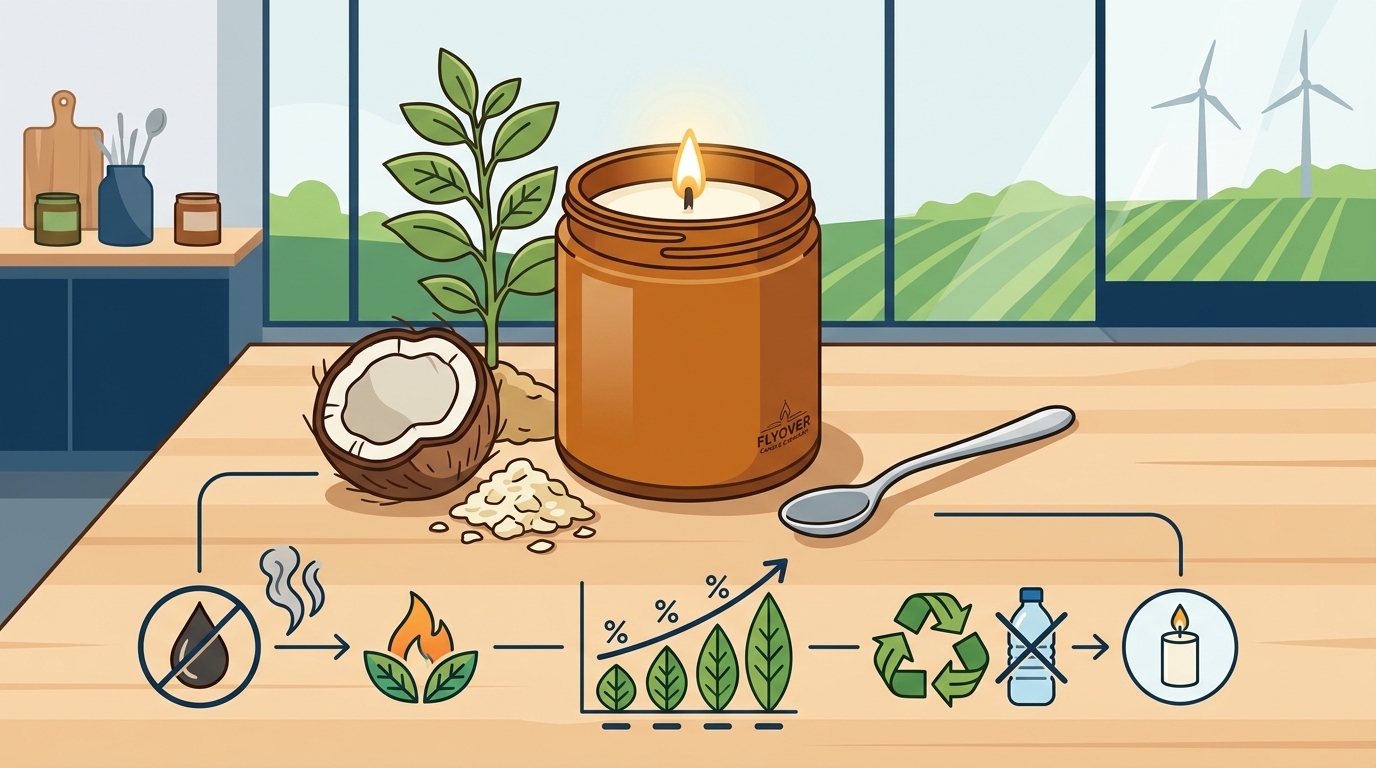
If you seek to minimize waste entirely, consider alternatives that eliminate wax and wicks altogether. Reed diffusers offer a continuous, flame-free fragrance source. They utilize natural essential oils and reeds made from rattan or wood to draw scent into the room. This method is ideal for those with allergies to smoke or open flames. Another option is solid perfumes or wax melts made from eco-friendly bases. These products allow you to control the intensity of the scent and reduce packaging waste.
At Flyover Candle Company, we are exploring new ways to reduce our environmental footprint. Our upcoming Summer 2026 collection will feature innovative packaging solutions designed to be fully recyclable. We believe that true sustainability involves looking beyond the product itself to the entire lifecycle of consumption. By choosing flameless options or refillable systems, you contribute to a circular economy that values resource efficiency.
Comparison of Eco-Friendly Options
| Material | Source | Burn Time | Scent Throw | Eco-Impact |
|---|---|---|---|---|
| Coconut Wax | Coconut meat | Long | Excellent | Low carbon, renewable |
| Soy Wax | Soybean oil | Medium | Good | Variable, check sourcing |
| Beeswax | Honeybee hives | Very Long | Natural/Subtle | Byproduct, air purifying |
| Paraffin | Petroleum | Medium | Strong | High pollution, non-renewable |
Key Takeaways
- Coconut wax offers superior scent throw and cleaner burning compared to traditional soy or paraffin.
- Always verify the sourcing of soy wax to ensure it is not linked to deforestation.
- Beeswax provides natural air purification but is not suitable for vegan lifestyles.
- Flameless alternatives like reed diffusers eliminate soot and fire risks entirely.
- Flyover Candle Company uses coconut wax to ensure a premium, eco-conscious experience.
- Summer 2026 collections will introduce new sustainable packaging initiatives.
- Choosing eco-friendly candles supports renewable agriculture and reduces toxic emissions.
Frequently Asked Questions
Is coconut wax better than soy wax?
Coconut wax generally offers a stronger scent throw and burns cleaner than soy wax. It also has a lower melting point, which allows for better fragrance release at lower temperatures.
Are eco-friendly candles safe for indoor air quality?
Yes, natural waxes like coconut, soy, and beeswax burn significantly cleaner than paraffin. They produce minimal soot and avoid releasing harmful volatile organic compounds.
How can I dispose of old candle jars sustainably?
Once the wax is fully consumed, clean the jar thoroughly. Most glass containers are recyclable. You can also repurpose them for storage or planting small succulents.
Does Flyover Candle Company use sustainable packaging?
We are committed to sustainability. Our packaging is designed to be recyclable, and our Summer 2026 collection will feature enhanced eco-friendly materials.
What is the best alternative to candles for pet owners?
Reed diffusers or essential oil burners are excellent alternatives. They provide fragrance without open flames, which can be stressful for pets or pose a safety risk.
Why is paraffin wax considered harmful?
Paraffin is a petroleum byproduct. When burned, it can release benzene and toluene, which are known carcinogens. It also contributes to indoor air pollution.
How do I choose a fragrance that lasts?
Look for candles made with coconut wax or high-quality essential oils. These materials hold scent longer and release it more consistently than synthetic fragrances in paraffin.
Shop Sustainable Scents
Transitioning to eco-friendly home fragrance is a simple yet impactful step toward a healthier lifestyle. By choosing coconut wax candles, you support sustainable agriculture and enjoy a superior burning experience. Explore our Signature Collection to discover scents crafted with care. Visit our Summer 2026 Collection for the latest limited-release fragrances. Join us in elevating your space with clean, conscious beauty.