
The global candle market is projected to reach significant valuation milestones in the coming years, driven by a consumer shift toward home wellness and artisanal home decor. According to recent market analysis, the industry is experiencing robust growth as buyers prioritize clean-burning options over traditional paraffin products. This surge in demand has led to an influx of new brands, making it increasingly difficult for shoppers to distinguish between premium, hand-poured craftsmanship and mass-produced imitations. Understanding the technical differences in wax composition, wick selection, and fragrance load is essential for ensuring you receive a product that burns evenly and fills your space with the intended aroma.
Understanding Wax Composition and Purity
The foundation of any high-quality candle is the wax itself. Historically, paraffin wax was the industry standard due to its low cost and ease of molding. However, paraffin is a byproduct of petroleum refining. When burned, it can release trace amounts of soot and volatile organic compounds. In contrast, modern artisanal brands have largely shifted toward plant-based alternatives. Coconut wax is derived from the meat of coconuts and is celebrated for its ability to hold fragrance oils at high concentrations. This results in a superior cold throw, which is the scent intensity of the candle when it is unlit.
Another popular option is soy wax, which is made from hydrogenated soybean oil. Soy wax is biodegradable and burns cleaner than paraffin. However, it can sometimes leave frosting, a white crystalline residue on the sides of the jar, which is cosmetic but often mistaken for a defect by inexperienced buyers. Beeswax is the third major category. It is naturally hydrophobic and burns at a higher temperature, making it excellent for outdoor use or long-burn scenarios. Beeswax also naturally produces negative ions when burned, which some studies suggest can help purify the air by attaching to pollutants.
When evaluating a brand, check their product descriptions for specific wax blends. A pure coconut wax candle will typically have a softer texture and a lower melting point than a soy blend. This is not a flaw but a characteristic of the material. Brands that prioritize transparency will clearly state their wax type. For instance, Flyover Candle Company utilizes coconut wax to ensure a clean burn and maximum scent throw. You can explore their full collection of hand-poured candles to see how wax type affects the final product appearance.
The Science of Fragrance Load and Throw
Fragrance load refers to the percentage of fragrance oil mixed into the wax. The industry standard for high-quality candles typically ranges from 8 to 12 percent. Anything below 6 percent is considered low load and may result in a weak scent profile. Conversely, loads exceeding 12 percent can sometimes cause the wax to sweat or fail to cure properly, leading to poor burn performance. The quality of the fragrance oil itself is equally important. Synthetic oils are cheaper and can produce a sharp, chemical-like scent upon ignition. Natural essential oils or high-grade synthetic blends offer more complex and nuanced aroma profiles.
Throw is divided into two categories: cold throw and hot throw. Cold throw is the scent you perceive when the candle is not lit. Hot throw is the diffusion of scent into the room once the candle is burning. A well-formulated candle will have a balanced hot throw that fills a medium-sized room without becoming overpowering. If a candle has a strong cold throw but a weak hot throw, the fragrance molecules may not be binding correctly with the wax. This is often a sign of poor formulation. You can learn more about the signature collection which is designed to maintain consistent scent performance across all seasons.
Another factor is the curing time. After the wax is poured and the wick is inserted, the candle must cure for a specific period, usually 1 to 2 weeks. This allows the fragrance oils to fully bind with the wax. Rushing this process results in a candle that burns too hot and loses its scent quickly. Premium brands adhere to strict curing protocols. For example, the Summer 2026 collection undergoes a rigorous curing process to ensure the lush, seasonal scents are fully developed before they reach your home.
Wick Selection and Burn Dynamics
The wick is the engine of the candle. It must be perfectly matched to the wax type, fragrance load, and container diameter. A wick that is too small for the jar will create a tunnel, where the wax melts only in the center, leaving a hard ring of unburnt wax on the sides. This wastes product and shortens the candle's life. A wick that is too large will create a flame that is too tall, causing excessive soot and overheating the glass, which can lead to cracking.
Common wick materials include cotton, paper-core, and wood. Cotton wicks are the standard for most jar candles. They provide a steady, clean flame. Wood wicks are gaining popularity for the crackling sound they produce, which adds an auditory element to the sensory experience. However, wood wicks require more oxygen and may need to be trimmed more frequently. The construction of the wick also matters. Some wicks have a braided core for stability, while others are flat for a wider burn pool.
Proper burn care is essential for maintaining wick performance. It is recommended to burn a candle until the melt pool reaches the edges of the jar on the first use. This prevents tunneling. If a wick develops a large mushrooming carbon deposit at the tip, it should be trimmed before relighting. For tips on maintaining your candles, you can visit our about us page to meet the maker and learn about our care standards.
The Hand-Poured Manufacturing Process
Hand-poured candles are made individually or in small batches, allowing for greater control over quality. This process involves melting the wax, adding the fragrance oil at a specific temperature, pouring the mixture into containers, and inserting the wicks. Each step requires precision. If the wax is poured at the wrong temperature, it can result in air bubbles, sinkholes, or poor adhesion to the glass. Small-batch production ensures that each candle is inspected for defects before packaging.
In contrast, mass-produced candles are often made in large industrial facilities with automated pouring lines. While this increases efficiency, it can lead to inconsistencies in wick placement and fragrance distribution. Hand-poured candles often have a more artisanal feel, with slight variations that highlight their unique origin. Supporting small businesses like Flyover Candle Company means supporting artisans who pour each candle with care in their home studios. You can check our clearance section for discounted seasonal scents that are still crafted with the same high standards.
The location of production can also impact quality. Local manufacturing reduces the carbon footprint associated with shipping heavy wax products. It also allows for fresher products to reach the consumer faster. Many top-rated brands emphasize their local production as a key quality indicator. Our home and accessories page features complementary items like diffusers that share the same commitment to quality.
Quality Comparison Matrix
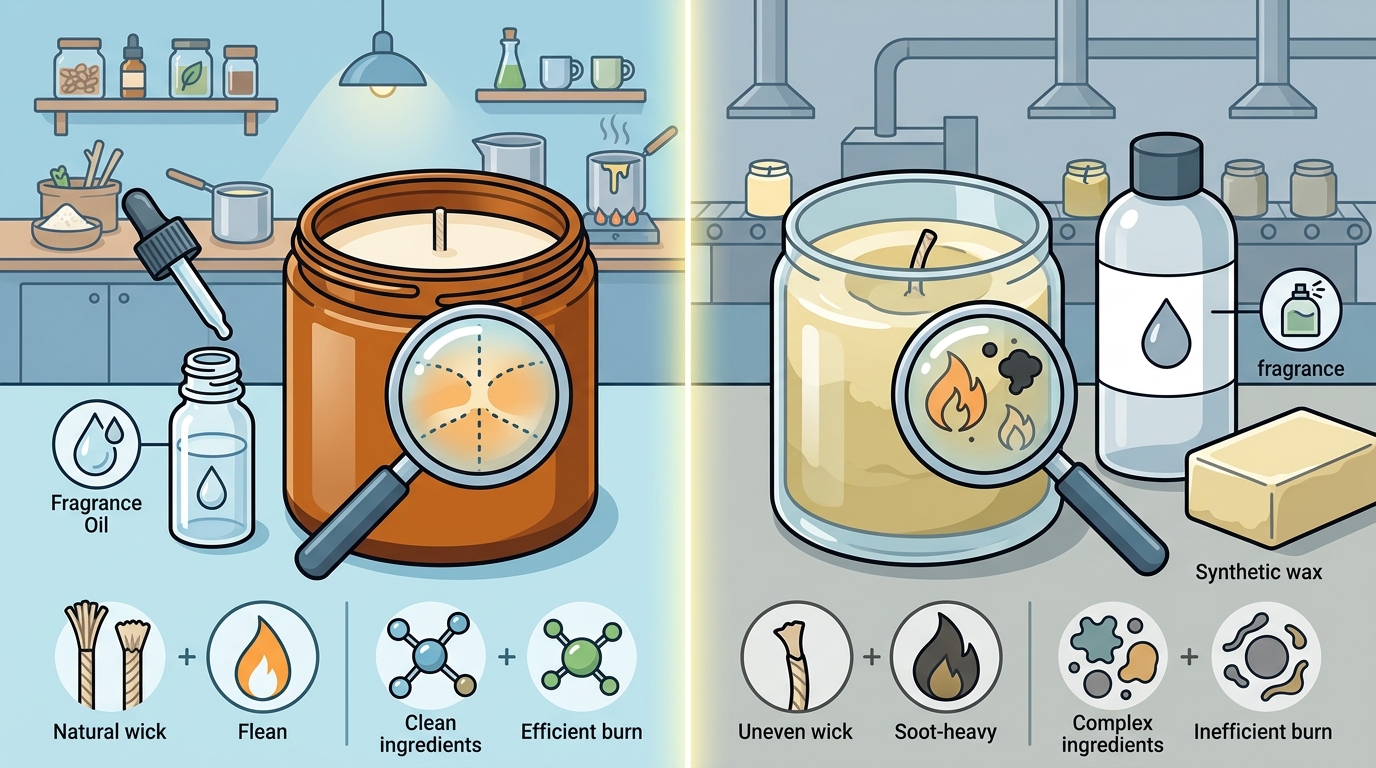
The following table summarizes the key differences between high-quality hand-poured candles and lower-quality mass-produced alternatives. This matrix helps you evaluate products based on objective criteria.
| Feature | High-Quality Hand-Poured | Mass-Produced / Low-End |
|---|---|---|
| Wax Type | Pure Coconut, Soy, or Beeswax | Paraffin or Low-Grade Soy Blends |
| Fragrance Load | 8% to 12% High-Grade Oils | Below 6% or Synthetic Fillers |
| Burn Cleanliness | Minimal to No Soot | Visible Soot and Black Smoke |
| Wick Quality | Properly Sized Cotton or Wood | Undersized or Paper-Core Wicks |
| Curing Time | 1 to 2 Weeks Minimum | None or Very Short |
| Transparency | Clear Ingredient Disclosure | Vague "Fragrance" Labels |
Key Takeaways
- Wax Purity Matters: Coconut and soy waxes burn cleaner and hold scent better than paraffin.
- Fragrance Load is Critical: Look for an 8-12% load for optimal scent throw and longevity.
- Wick Matching: A properly sized wick prevents tunneling and ensures an even burn pool.
- Curing Time: Allow candles to cure for at least one week to maximize fragrance binding.
- Small Batch Production: Hand-poured candles offer better quality control and artisanal craftsmanship.
- Transparency: Reputable brands clearly list their wax type, fragrance load, and origin.
- Brand Reputation: Check for reviews and maker stories to verify quality claims.
Frequently Asked Questions
What is the best wax for a clean burn?
Pure coconut wax and soy wax are widely considered the best options for clean burning. They produce minimal soot compared to paraffin wax, which is a petroleum byproduct. Coconut wax is particularly noted for its smooth finish and excellent fragrance retention.
How long should a candle cure before burning?
A candle should cure for at least 1 to 2 weeks after pouring. This period allows the fragrance oils to fully bind with the wax, resulting in a stronger hot throw when the candle is lit. Burning a candle immediately after pouring can lead to a weak scent and uneven burn.
Why does my candle tunnel?
Tunneling occurs when the wick is too small for the jar diameter or when the candle is not burned long enough on the first use. To prevent this, ensure the melt pool reaches the edges of the jar on the first burn. If tunneling has already occurred, you can use a foil tent method to help melt the sides.
What is the difference between cold throw and hot throw?
Cold throw is the intensity of the scent when the candle is unlit. Hot throw is the ability of the candle to diffuse scent into the room while burning. A high-quality candle will have a balanced hot throw that fills the space without being overpowering.
Are wood wicks better than cotton wicks?
Wood wicks provide a crackling sound and a wider burn pool, which can enhance the sensory experience. However, they require more oxygen and may need more frequent trimming. Cotton wicks are the standard for a steady, clean flame and are suitable for most jar candles.
How do I know if a candle is hand-poured?
Hand-poured candles often have slight imperfections, such as small air bubbles or uneven tops, which indicate they were made in small batches. Additionally, brands that disclose their manufacturing process and wax type are more likely to be hand-poured. You can verify this by reading the about us section of the brand's website.
What is the ideal fragrance load percentage?
The ideal fragrance load for most jar candles is between 8% and 12%. Loads below 6% may result in a weak scent, while loads above 12% can cause the wax to sweat or burn improperly. High-quality brands carefully measure this ratio to ensure optimal performance.
Shop Premium Candles
Now that you understand the key indicators of candle quality, you are equipped to make smarter purchasing decisions. Whether you are looking for a signature scent for your living room or a seasonal fragrance for your office, choosing a hand-poured candle from a transparent brand ensures a superior experience. Explore our curated collection of clean-burning candles and discover the difference that quality wax and careful craftsmanship make. Visit our home page to sign up for exclusive updates and discounts on new releases.