
The global candle market is projected to reach significant valuation milestones in the coming years, driven by a consumer shift toward home wellness and artisanal products. According to recent industry reports, the demand for clean-burning, non-toxic home fragrances has increased by over 20 percent annually among millennial and Gen Z demographics. This surge means shoppers are no longer just buying a scent; they are investing in a complex chemical and physical product. Understanding the difference between a mass-produced paraffin candle and a premium hand-poured coconut wax creation is essential for getting value for your money.
Understanding Wax Composition and Purity
The foundation of any high-quality candle is the wax itself. Historically, paraffin wax was the industry standard because it is cheap and holds scent well. However, paraffin is a petroleum byproduct that can release soot and volatile organic compounds when burned. In contrast, modern artisanal brands prioritize natural alternatives.
Coconut wax is widely considered the gold standard for premium candles. Coconut wax is a highly refined, natural wax derived from the meat of coconuts. It offers a superior cold throw, meaning the scent is strong even when the candle is unlit. Furthermore, it burns cleaner and slower than soy or paraffin. When evaluating a brand, check if they disclose their wax blend. A 100 percent coconut wax candle will typically cost more but perform significantly better than a soy blend.
At Flyover Candle Company, we utilize 100 percent coconut wax to ensure a clean burn and maximum scent diffusion. Our Signature Collection highlights this commitment to purity, offering scents like Back Roads and Clothesline that rely on high-quality wax to carry the fragrance notes effectively.
Fragrance Load and Scent Throw
Not all candles smell the same. The "fragrance load" refers to the percentage of fragrance oil mixed into the wax. A low-quality candle might only contain 6 to 8 percent fragrance, resulting in a weak scent. A high-quality artisanal candle typically contains 8 to 12 percent or more. This higher load ensures that the scent fills the room, a property known as the "hot throw." The quality of the fragrance oil also matters. Synthetic oils can smell sharp or chemical-like when heated. Natural essential oil blends or high-grade synthetic isolates provide a smoother, more complex aroma profile. Look for brands that describe their scent notes in detail. For instance, our Summer 2026 Collection features State Fair Lemonade, a scent designed to evoke specific memories through precise aromatic layering.
The Science of the Wicking System
The wick is the engine of the candle. A poorly chosen wick can cause tunneling, where the wax melts only in the center, leaving a ring of unmelted wax on the sides. This wastes product and ruins the burn. The wick size must match the wax type and the container diameter.
Wood wicks are popular for their crackling sound, but they require precise sizing to avoid excessive soot. Cotton wicks are the traditional choice for a steady, clean flame. If you notice your candle smoking heavily or producing a large flame, the wick is likely too large for the wax blend. Testing different wick types is a critical part of the candle-making process. Brands that invest in rigorous testing, like those featured in our Home & Accessories line, ensure that every candle performs safely and efficiently from the first light.
Burn Time and Yield Analysis
Price per hour of burn time is the true metric of value. A cheap candle that burns out in 20 hours is more expensive than a premium candle that lasts 60 hours. Coconut wax, for example, has a lower melting point, which can sometimes lead to faster consumption if the candle is burned in a hot room. However, its density often compensates for this.
When comparing brands, look for the stated burn time on the label. Reputable manufacturers test their candles to determine this figure accurately. If a brand does not disclose burn time, it is a red flag. Our Fire Starter Variety Pack and other products are designed with longevity in mind, ensuring that you get the most out of every purchase.
Evaluating Brand Ethics and Transparency
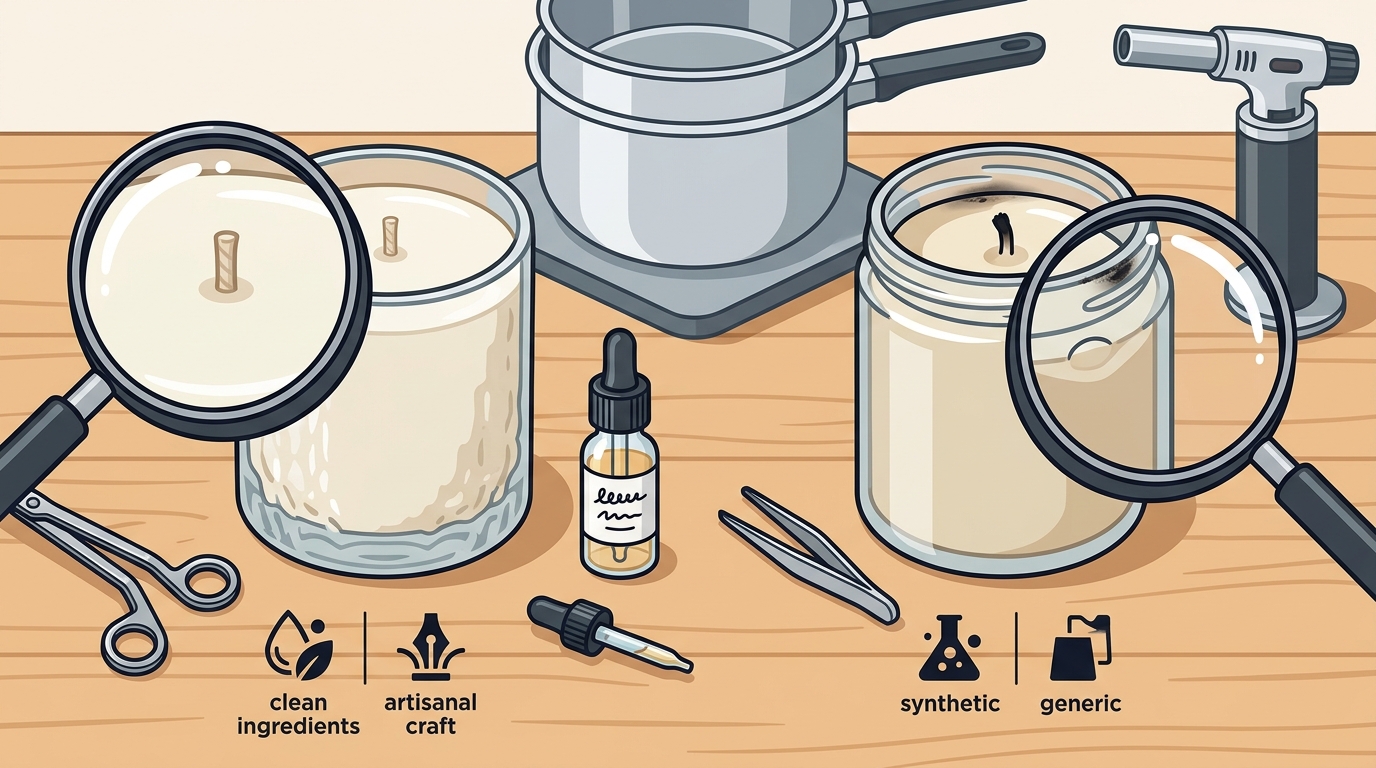
The candle industry is filled with drop-shipped products and vague manufacturing origins. Supporting small-batch makers ensures that your money goes directly to the artisans who craft your candles. Hand-poured candles are made in small quantities, allowing for greater quality control.
Transparency is key. Does the brand explain where their wax comes from? Do they disclose their fragrance sources? At Flyover Candle Company, we are proud to hand-pour our candles in Des Moines, Iowa. This local production allows us to maintain strict quality standards and support the local economy. We also offer wholesale opportunities for businesses that value ethical sourcing.
Quality Comparison Matrix
The following table summarizes the key differences between mass-produced candles and premium hand-poured options.
| Feature | Mass-Produced Candle | Premium Hand-Poured Candle |
|---|---|---|
| Wax Type | Paraffin or low-grade Soy blend | 100% Coconut or high-grade Soy |
| Fragrance Load | 6-8% (Weak throw) | 8-12%+ (Strong throw) |
| Burn Cleanliness | High soot, black smoke | Minimal to no soot |
| Manufacturing | Large factory, overseas | Small batch, local studio |
| Price Point | $10 - $15 | $20 - $30 |
Key Takeaways
- Wax Matters: Coconut wax burns cleaner and holds scent better than paraffin.
- Fragrance Load: Look for 8-12% fragrance oil for a strong hot throw.
- Wick Quality: Proper wicking prevents tunneling and soot.
- Burn Time: Calculate cost per hour, not just the sticker price.
- Transparency: Support brands that disclose their sourcing and manufacturing location.
- Small Batch: Hand-poured candles offer superior quality control.
- Local Impact: Buying from local makers like Flyover Candle Company supports the community.
Frequently Asked Questions
What is the best wax for a clean burn?
Coconut wax is widely regarded as the best wax for a clean burn because it is natural, non-toxic, and produces minimal soot compared to paraffin.
How do I know if a candle has a good scent throw?
A good scent throw is indicated by a high fragrance load (8-12%) and the use of high-quality fragrance oils. The scent should be noticeable in the room while the candle is burning.
Why do hand-poured candles cost more?
Hand-poured candles cost more due to the labor-intensive process, higher-quality materials like coconut wax, and smaller production batches that ensure quality control.
What is tunneling in candles?
Tunneling is when the wax melts only in the center of the candle, leaving a ring of hard wax on the sides. This is usually caused by a wick that is too small for the container.
Are essential oil candles better than fragrance oil candles?
Essential oil candles are natural but often have a weaker throw. High-quality fragrance oils are engineered to provide a stronger, more consistent scent profile that lasts longer.
How long should a new candle burn?
A new candle should burn long enough to create a full melt pool across the entire surface. This usually takes 2-4 hours, depending on the jar size.
Where are Flyover Candle Company products made?
Our candles are hand-poured in Des Moines, Iowa, ensuring local craftsmanship and quality.
Do you offer wholesale options?
Yes, we offer wholesale and custom inquiry options for businesses looking to stock premium candles.
Shop Premium Candles
Ready to elevate your home fragrance experience? Explore our full collection of hand-poured coconut wax candles. From our Signature Collection to our limited Summer 2026 releases, find the perfect scent for your space. Visit our homepage to sign up for exclusive discounts and updates.