
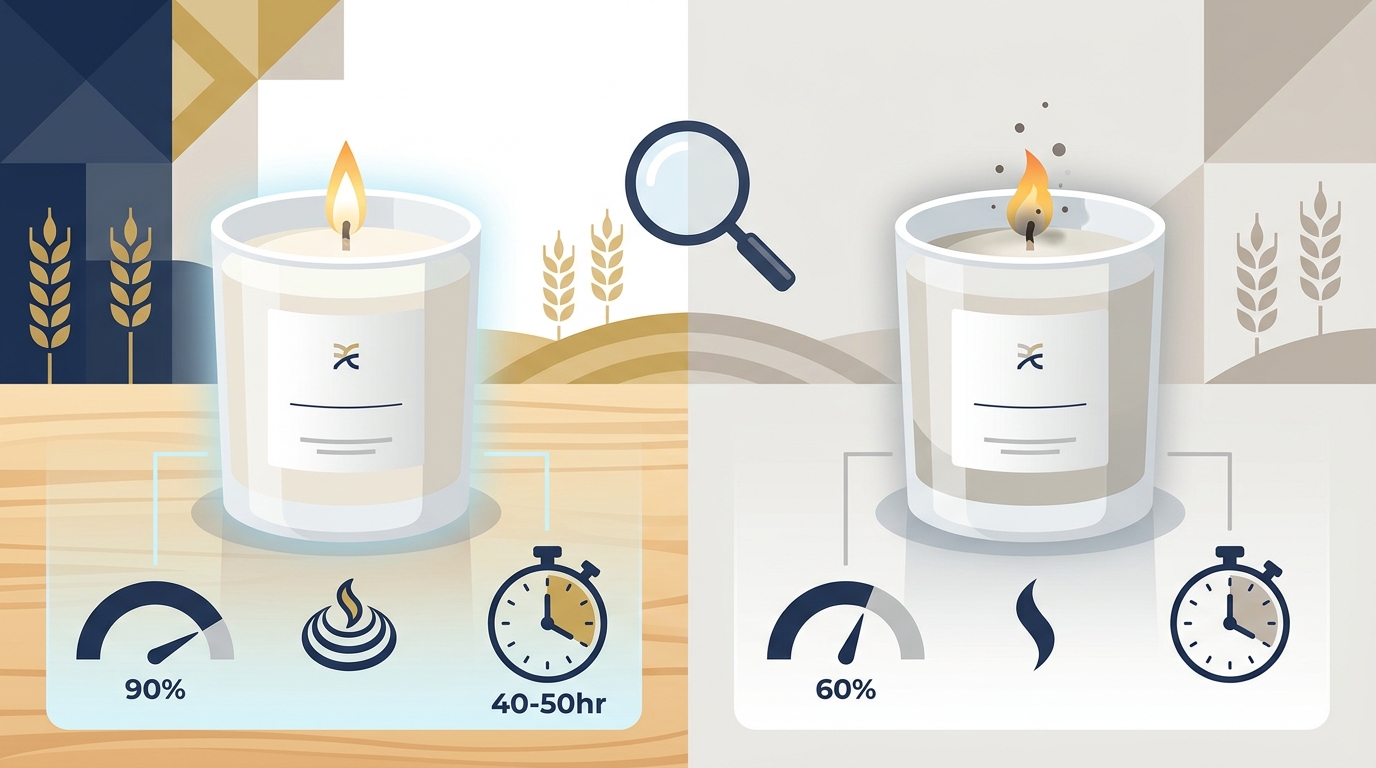
Industry data shows that premium hand-poured candles deliver an average burn time data of forty to fifty hours per standard eight-ounce vessel. This performance metric directly correlates with wax purity and fragrance oil concentration. Consumers frequently overlook critical manufacturing variables when selecting home fragrance products. Understanding these technical distinctions prevents wasted spending and ensures consistent indoor air quality. This guide breaks down the exact evaluation criteria used by professional fragrance evaluators and retail buyers to identify long-lasting, clean-burning options.
Evaluating Wax Composition
The foundational material determines how evenly a candle melts and how cleanly it burns. Coconut wax is a plant-based alternative derived from pressed coconut meat. This material offers a smooth surface finish and exceptional scent throw. Soy wax is a renewable plant-based material extracted from deoxygenated soybean oil. It burns slower than traditional petroleum-based alternatives. Paraffin wax is a petroleum-derived byproduct that retains fragrance molecules exceptionally well. Consumers should prioritize plant-based blends when prioritizing indoor air quality.
Manufacturers often blend multiple wax types to optimize burn characteristics. A coconut-soy blend typically melts at a lower temperature than pure paraffin. This lower melting point reduces the risk of overheating the glass container. You can explore our core collection of plant-based blends by visiting our Signature Collection page. Always verify the primary wax percentage on the product label. Brands that disclose exact ratios demonstrate higher manufacturing standards.
Analyzing Wick Selection
The wick acts as the fuel delivery system for the entire candle. Cotton wicks are a braided natural fiber that draws melted wax upward through capillary action. These fibers produce minimal soot when properly sized for the container diameter. Paper-core wicks are a synthetic blend containing embedded metal or paper strips to maintain structural rigidity. These variants often require precise diameter matching to prevent tunneling.
Manufacturers must match wick thickness to wax density and container width. A thick wick in a narrow jar creates an oversized flame and excessive heat. A thin wick in a wide jar fails to melt the wax to the edges. This failure creates a tunnel that wastes up to thirty percent of the total wax volume. You can review our seasonal releases to see how we size wicks for specific jar dimensions on our Summer 2026 collection page. Proper wick sizing directly impacts both safety and total burn duration.
Assessing Fragrance Load
Fragrance load represents the total percentage of aromatic compounds mixed into the melted wax matrix. A standard commercial candle typically contains a fragrance load between six and ten percent. Premium artisan candles frequently exceed twelve percent to ensure robust scent diffusion. High fragrance loads require careful temperature control during the pouring process. Excessive heat degrades volatile aromatic compounds and reduces throw quality.
Consumers should verify the fragrance oil source and concentration on product packaging. Reputable suppliers disclose whether they use synthetic isolates or natural botanical extracts. Synthetic isolates provide consistent batch-to-batch performance. Natural botanical extracts offer complex aromatic profiles but require stricter storage conditions. You can browse our wholesale partnership guidelines to learn how we source aromatic compounds on our Wholesale page. Always test a single unit before purchasing bulk inventory for commercial spaces.
Measuring Burn Quality
Burn quality encompasses melt pool formation, flame stability, and soot production. A properly burning candle creates a complete melt pool that reaches the container edges within two to three hours. Incomplete melt pools indicate wick mismatch or improper wax formulation. Excessive soot production signals incomplete combustion or contaminated air filters. Consumers should inspect the wick tip after the first burn to verify clean carbonization.
Manufacturers must control room temperature and humidity during the curing phase. Curing allows aromatic compounds to bind permanently with the solidified wax matrix. Premature packaging disrupts this chemical bonding process and weakens scent throw. You can explore our stockist network to find authorized retailers carrying fully cured units on our Stockists page. Consistent burn quality remains the strongest indicator of professional manufacturing standards.
Reviewing Brand Transparency
Transparent brands publish detailed manufacturing protocols and ingredient disclosures. Clear labeling requirements mandate accurate weight declarations and hazard warnings. The Federal Trade Commission enforces strict guidelines regarding environmental marketing claims. Companies that ignore these regulations risk consumer lawsuits and retail removal. You should verify that every product page lists exact dimensions, wax type, and burn time estimates.
Reputable manufacturers also disclose their packaging sustainability practices. Recyclable glass containers and compostable shipping materials reduce long-term environmental impact. Brands that publish annual sustainability reports demonstrate operational accountability. Consumers should prioritize companies that invest in third-party laboratory testing. Independent verification guarantees that advertised claims match actual product performance.
Comparative Wax and Wick Matrix
| Wax Type | Primary Burn Characteristic | Fragrance Retention | Recommended Use Case |
|---|---|---|---|
| Coconut Blend | Smooth melt pool formation | High | Year-round home fragrance |
| Soy Blend | Extended burn duration | Moderate | Large open spaces |
| Paraffin Blend | Maximum scent throw | Very High | Commercial retail displays |
| Palm Blend | Stable flame height | Moderate | Outdoor patio settings |
Key Takeaways
- Premium hand-poured candles deliver an average burn time of forty to fifty hours per standard eight-ounce vessel.
- Coconut wax blends consistently outperform pure soy variants in melt pool formation and surface finish.
- Wick diameter must match container width to prevent tunneling and wasted wax volume.
- Fragrance loads exceeding twelve percent require extended curing periods for optimal scent throw.
- Transparent labeling compliance reduces consumer risk and ensures accurate product expectations.
- Third-party laboratory testing validates all manufacturer claims regarding soot production and burn stability.
- Authorized stockist networks guarantee proper storage conditions and batch freshness.
Frequently Asked Questions
How do I verify if a candle uses pure coconut wax?
Manufacturers must list coconut wax as the primary ingredient on the front label. Pure coconut blends contain zero petroleum-derived paraffin components. You can verify exact ratios by reviewing the detailed product specifications on our Signature Collection page. Always request a Certificate of Analysis from the manufacturer for commercial purchases.
Why do some candles produce excessive black soot?
Excessive soot results from incomplete combustion caused by oversized wicks or contaminated air filters. Trimming the wick to one-quarter inch before each lighting prevents carbon buildup. Reputable brands test wick diameters across multiple room temperatures to ensure clean burning. You can review our safety guidelines on our About Us page for detailed maintenance protocols.
What is the ideal fragrance load for maximum scent throw?
Fragrance load represents the total percentage of aromatic compounds mixed into the melted wax matrix. Premium artisan candles frequently exceed twelve percent to ensure robust scent diffusion. High fragrance loads require careful temperature control during the pouring process. You can explore our wholesale partnership guidelines to learn how we source aromatic compounds on our Wholesale page.
How long should I allow a candle to cure before burning?
Curing allows aromatic compounds to bind permanently with the solidified wax matrix. Most professional manufacturers recommend a fourteen to twenty-one day curing period. Premature packaging disrupts this chemical bonding process and weakens scent throw. You can browse our seasonal releases to see how we size wicks for specific jar dimensions on our Summer 2026 collection page.
Are hand-poured candles safer than machine-poured alternatives?
Hand-poured candles allow artisans to monitor temperature gradients and adjust wick placement manually. Machine-poured variants prioritize production speed over individual burn optimization. Both methods achieve safety compliance when manufacturers follow standardized testing protocols. You can explore our stockist network to find authorized retailers carrying fully cured units on our Stockists page.
Ready to Evaluate Your Next Candle Purchase?
Apply these evaluation criteria to your next home fragrance investment. Verify wax composition, inspect wick sizing, and confirm fragrance load percentages before purchasing. Transparent brands provide detailed manufacturing protocols and independent laboratory results. Visit our main storefront to browse current seasonal releases and wholesale partnership opportunities. Shop our complete collection today and experience the difference that professional hand-poured manufacturing standards deliver.