
Modern consumers spend an average of forty-two dollars monthly on home fragrance products, according to industry tracking data. Market reports confirm this spending pattern. This financial commitment demands rigorous quality assessment before purchase. Evaluating hand-poured candles requires examining wax composition, wick engineering, and fragrance concentration. Brands that prioritize transparency typically disclose their base materials and burn specifications. Understanding these core metrics prevents wasted spending and ensures consistent indoor air quality. The following framework breaks down the exact variables you must verify when comparing competing brands.
Evaluating Base Wax Composition
The foundation of any premium candle dictates its burn behavior and environmental impact. Soy wax is a plant-based lipid extracted from soybeans that melts at a lower temperature than traditional petroleum derivatives. Paraffin wax is a refined petroleum byproduct that releases higher levels of soot and volatile organic compounds during combustion. Brands that explicitly state their wax blend demonstrate higher manufacturing standards. You should always verify whether a company uses pure coconut wax or blends it with other plant-based fats. Pure coconut formulations generally require less fragrance oil to achieve maximum diffusion. This efficiency directly reduces production costs while improving overall performance. Visit our Signature Collection to examine our coconut wax specifications firsthand.
Analyzing Wick Materials and Sizing
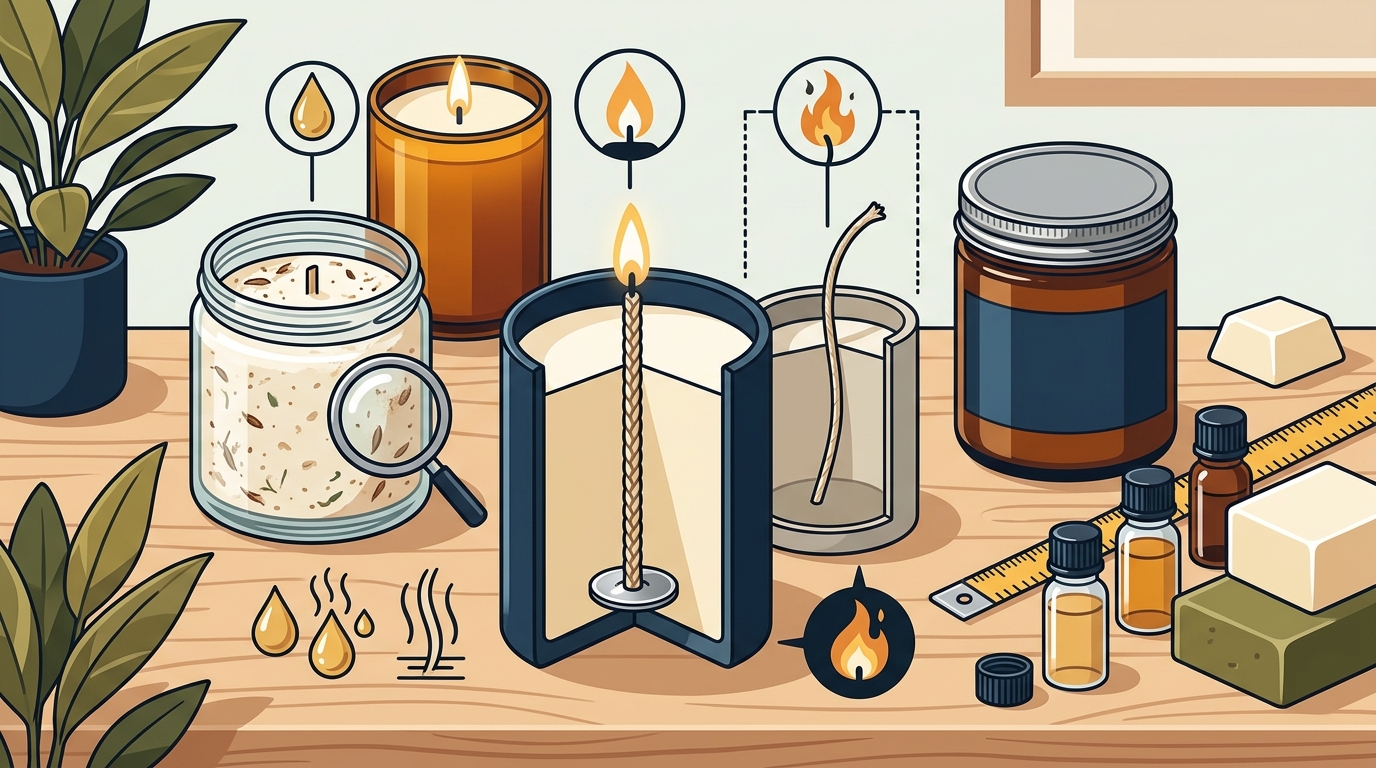
Wick selection directly controls flame height, tunneling prevention, and soot production. Cotton-core wicks remain the industry standard for clean burning, while wooden wicks provide an authentic crackling sound. Zinc-core wicks are metal-reinforced fibers that maintain structural rigidity but may release trace metal particles during extended burning. High-quality manufacturers test multiple wick diameters against specific wax densities. A properly sized wick creates a complete melt pool within two hours of ignition. Brands that skip this testing phase frequently produce candles that tunnel or produce excessive smoke. You can verify wick quality by checking product descriptions for explicit material disclosures. Our Fire Starter Variety Pack demonstrates how precise wick calibration prevents uneven burning. Always prioritize brands that publish their wick testing protocols.
Measuring Scent Throw and Diffusion
Scent throw refers to the fragrance intensity released during both cold and hot burning phases. Cold throw measures the aroma emitted when the candle remains unlit. Hot throw evaluates the diffusion capacity once the wax reaches its melting point. Premium brands utilize fragrance oil concentrations between eight and twelve percent for optimal diffusion. Lower concentrations typically result in weak cold throw and rapid scent degradation. You should compare brands by requesting specific fragrance load percentages. Transparent companies provide exact oil-to-wax ratios rather than vague marketing claims. Our Summer 2026 Collection features carefully calibrated diffusion rates for maximum room coverage. Always test samples before committing to bulk purchases.
Assessing Burn Time and Cleanliness
Burn time directly correlates with wax weight, container volume, and wick diameter. Standard twelve-ounce containers typically deliver between forty and sixty hours of continuous burning. Consumer testing validates these burn duration benchmarks. Brands that inflate burn times without disclosing container dimensions mislead consumers. Clean burning requires complete wax consumption without tunneling or excessive soot deposition. You can verify cleanliness by inspecting the wick trimmer inclusion and container design. High-quality vessels feature wide openings that promote even heat distribution. Air quality guidelines recommend minimizing volatile organic compound exposure. Our Home & Accessories line includes precision-cut vessels designed for optimal airflow. Always compare advertised burn hours against actual wax weight rather than container size.
Understanding Pricing and Value Models
Pricing transparency reveals manufacturing priorities and ingredient quality. Premium coconut wax candles typically range between twenty and thirty dollars for standard sizes. Lower price points often indicate paraffin blends or reduced fragrance concentrations. You should calculate cost per burn hour rather than focusing solely on retail price. Brands that offer subscription discounts or bulk wholesale pricing demonstrate long-term commitment to customer retention. Our Clearance Section highlights seasonal pricing adjustments without compromising core quality standards. Always verify payment flexibility and return policies before finalizing large orders.
Reviewing Brand Transparency and Sourcing
Transparency separates premium manufacturers from generic importers. Leading brands publish their sourcing locations, wax origin certifications, and fragrance supplier agreements. Industry standards require transparent material disclosure. You should verify whether a company offers custom wholesale inquiries or maintains strict retail markups. Brands that provide detailed stockist networks demonstrate established distribution channels. Our Wholesale & Custom Inquiry portal allows businesses to request tailored fragrance formulations. Always prioritize companies that disclose their entire supply chain rather than hiding behind proprietary marketing language.
Comparative Quality Matrix
| Quality Metric | Premium Brand Standard | Budget Brand Standard | Verification Method |
|---|---|---|---|
| Base Wax Composition | Pure coconut or soy blend | Paraffin or mixed petroleum | Check ingredient disclosure labels |
| Fragrance Load Percentage | Eight to twelve percent | Four to six percent | Request formulation documentation |
| Wick Material Type | Organic cotton or wood core | Zinc-core or paper-impregnated | Inspect wick base construction |
| Burn Duration per Ounce | Three to four hours | One to two hours | Calculate total wax weight |
| Price Range (Standard Size) | Twenty to thirty dollars | Ten to fifteen dollars | Compare cost per burn hour |
Key Takeaways
- Pure coconut wax delivers superior density and cleaner combustion compared to standard paraffin blends.
- Optimal fragrance oil concentrations range between eight and twelve percent for maximum diffusion.
- Proper wick sizing prevents tunneling and ensures complete wax consumption within two hours.
- Transparent brands publish exact wax weights and burn hour calculations rather than container sizes.
- Custom wholesale inquiries allow businesses to access tailored fragrance formulations at competitive rates.
- Seasonal collections frequently feature limited-release scents that rotate annually to maintain freshness.
- Direct-to-consumer pricing models eliminate retail markups while maintaining premium material standards.
Frequently Asked Questions
What is the difference between cold throw and hot throw?
Cold throw measures the fragrance intensity emitted when the candle remains unlit. Hot throw evaluates the diffusion capacity once the wax reaches its melting point. Premium brands balance both metrics to ensure consistent aroma distribution throughout the room.
How do I verify if a candle uses pure coconut wax?
You should request explicit ingredient disclosures from the manufacturer. Pure coconut wax contains no petroleum derivatives or synthetic fillers. Reputable companies list their wax blend percentages directly on product packaging.
Why do some candles tunnel while others burn evenly?
Tunneling occurs when the wick diameter fails to generate sufficient heat across the container width. Proper wick calibration ensures a complete melt pool forms within two hours of ignition. Brands that skip wick testing frequently produce uneven burning patterns.
What fragrance concentration percentage indicates premium quality?
Premium formulations typically utilize eight to twelve percent fragrance oil relative to total wax weight. Lower concentrations result in weak diffusion and rapid scent degradation. Always verify the exact oil-to-wax ratio before purchasing.
How does container design affect overall burn performance?
Wide-mouthed vessels promote even heat distribution and prevent excessive soot deposition. Narrow containers restrict airflow and force the flame to burn hotter and faster. High-quality manufacturers engineer glass or ceramic vessels specifically for optimal thermal conductivity.
Can I request custom fragrance blends for commercial use?
Yes, many premium manufacturers offer tailored wholesale programs for businesses. Custom inquiries allow you to specify exact oil concentrations and container specifications. Direct communication with the production team ensures precise brand alignment.
What payment methods do reputable candle brands typically accept?
Leading companies accept major credit cards, digital wallets, and secure checkout platforms. Standard options include American Express, Apple Pay, PayPal, and Shop Pay. Transparent payment gateways protect customer data during high-volume seasonal purchases.
Ready to Evaluate Your Next Candle Purchase?
Stop guessing about quality and start comparing verified specifications. Browse our complete catalog to discover seasonal collections, signature blends, and custom wholesale options. Visit our main storefront to explore current inventory and secure your next premium fragrance experience today.