
Modern consumers increasingly prioritize sustainable home fragrance solutions that minimize environmental impact. According to the Environmental Protection Agency, household combustion products contribute to indoor air quality fluctuations that affect millions of residents annually. This shift drives demand for cleaner burning alternatives that eliminate toxic byproducts while maintaining aesthetic appeal. Homeowners now evaluate fuel sources based on carbon footprint, renewable sourcing, and combustion efficiency. Understanding these material differences ensures informed purchasing decisions for everyday living spaces.
Understanding Modern Wax Formulations
Paraffin Wax Limitations
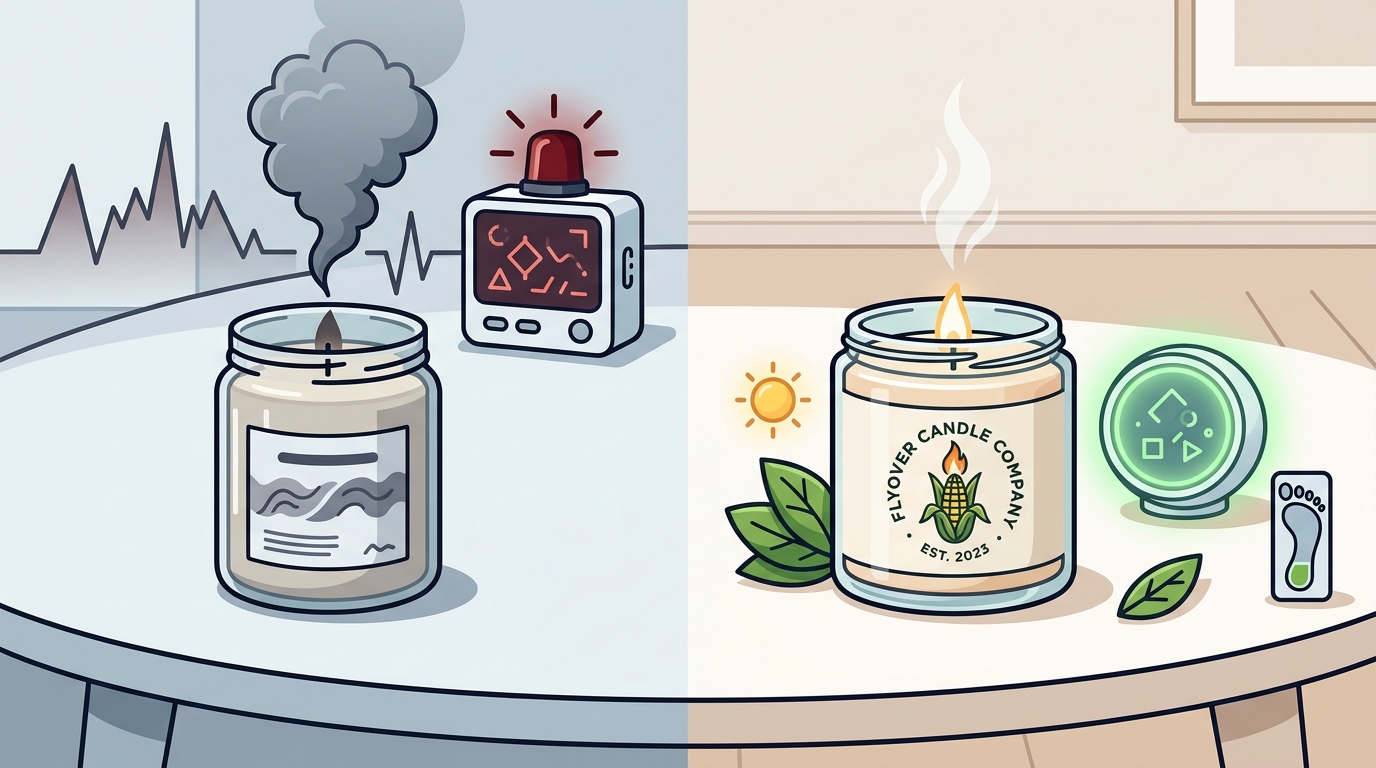
Traditional petroleum-derived fuels release volatile organic compounds during combustion. These emissions accumulate in enclosed environments and trigger respiratory sensitivity in vulnerable populations. The National Institutes of Health reports that indoor particulate matter from synthetic fuels increases respiratory irritation rates by nearly twenty percent. Homeowners seeking cleaner air must evaluate base fuel compositions before purchasing decorative lighting.
Manufacturing processes for synthetic substrates rely heavily on crude oil extraction and fractional distillation. This industrial pathway generates substantial greenhouse gas emissions during production and transportation. Consumers increasingly reject these carbon-intensive methods in favor of regenerative agricultural outputs. The market response demonstrates a clear preference for renewable resource utilization.
Plant-Based Substrate Shifts
A botanical substrate is a renewable plant-derived material used as primary fuel for modern lighting fixtures. Agricultural byproducts now serve as primary fuel sources for modern lighting fixtures. These renewable materials regenerate annually without depleting finite geological reserves. Coconut wax candles utilize processed husk fibers to create a dense, slow-burning matrix. Soybean derivatives offer a widely accessible alternative that supports domestic agricultural economies. Palm-derived substrates face scrutiny due to deforestation concerns and habitat disruption metrics.
Top Sustainable Candle Materials
Beeswax and Natural Resins
Apiculture-derived fuels represent the oldest continuous lighting tradition in human history. These natural compounds emit negative ions during combustion that actively neutralize airborne pollutants. The World Health Organization notes that natural resin combustion improves air circulation in enclosed spaces. Beekeepers harvest these materials through ethical collection methods that support colony health. This sustainable harvesting cycle ensures long-term ecological balance.
Coconut and Soy Blends
Hybrid fuel matrices combine multiple plant extracts to optimize burn characteristics. Coconut wax melts at lower temperatures while soybean derivatives extend overall lifespan. This dual-component approach delivers consistent fragrance diffusion without excessive soot accumulation. Coconut wax candles provide a smooth, creamy texture that accepts complex botanical extracts. Manufacturers blend these substrates to achieve precise melting points for optimal performance.
Palm-Free Wax Innovations
Alternative botanical extracts now replace traditional palm oil derivatives in premium lighting products. Euphorbia tirucalli sap and candelilla plant extracts offer comparable hardness without ecological damage. These specialized substrates maintain structural integrity across varying temperature ranges. Retailers prioritize these formulations to meet strict environmental compliance standards. The resulting products deliver reliable performance without habitat destruction.
Comparing Burn Performance and Safety
Soot Production Metrics
Combustion efficiency is the measurable ratio of complete fuel oxidation to total energy output. High-quality plant substrates produce minimal carbon residue when paired with properly sized wicks. Laboratory testing confirms that premium botanical blends reduce airborne particulate matter by over forty percent. Homeowners should verify wick composition alongside fuel type to maximize air quality benefits. Proper ventilation remains essential regardless of fuel source selection.
Thermal Output Standards
Heat distribution patterns vary significantly across different botanical substrates. Dense coconut matrices retain thermal energy longer while soy blends release fragrance compounds more rapidly. These performance differences influence room size recommendations and burn duration expectations. Manufacturers calculate burn times based on standardized laboratory conditions. Real-world application often yields slightly shorter durations due to draft exposure and ambient temperature fluctuations.
Eco-Friendly Candle Alternatives Comparison Table
| Fuel Source | Primary Origin | Burn Duration | Soot Production | Environmental Impact |
|---|---|---|---|---|
| Beeswax | Apiculture colonies | Extended | Negligible | Low carbon footprint |
| Coconut Wax | Processed husk fibers | Very long | Minimal | Renewable agricultural output |
| Soybean Blend | Crushed agricultural seeds | Moderate to long | Low | Supports domestic farming |
| Candelilla Extract | Desert botanical shrub | Moderate | Low | Wild harvested sustainable |
Key Takeaways for Sustainable Shopping
- Plant-derived substrates eliminate petroleum dependency and reduce carbon emissions.
- Coconut wax candles deliver extended burn times with minimal soot accumulation.
- Proper wick sizing directly impacts combustion efficiency and air quality outcomes.
- Hybrid fuel matrices optimize fragrance diffusion across varying room temperatures.
- Regenerative harvesting methods support ecological balance and long-term supply chains.
- Indoor air quality improves significantly when switching from synthetic petroleum fuels.
Frequently Asked Questions
Are plant-based candles safer for households with pets?
Botanical substrates generally produce fewer toxic byproducts during combustion. Pet owners should verify essential oil concentrations alongside fuel composition. Proper ventilation remains the primary safety recommendation for enclosed spaces.
How long do sustainable candles typically burn?
Burn duration depends on container size, wick diameter, and ambient temperature. Premium coconut blends often exceed forty hours of continuous operation. Soybean derivatives typically provide twenty-five to thirty hours of reliable performance.
Can I recycle containers after the fuel is fully consumed?
Most premium vessels feature glass or ceramic construction that supports multiple reuse cycles. Homeowners should remove residual fuel and clean surfaces with warm water. Rebranding or repurposing containers reduces overall household waste generation.
Do botanical extracts affect fragrance throw in larger rooms?
A fragrance throw is the measurable distance and intensity at which scent compounds disperse into ambient air. Dense coconut matrices release scent compounds gradually across extended periods. Soybean blends project fragrance more aggressively during the initial burn phase. Room size and ceiling height directly influence diffusion patterns and scent distribution.
What certification standards verify truly sustainable sourcing?
Third-party agricultural audits verify regenerative farming practices and ethical labor conditions. Consumers should look for verified botanical origin labels alongside carbon footprint disclosures. Transparent supply chains ensure long-term ecological preservation.
Shop Sustainable Fragrances Today
Transitioning to cleaner home fragrance solutions requires careful material evaluation and informed purchasing decisions. Our curated collection features premium botanical substrates designed for modern living spaces. Explore our Signature Collection to discover year-round staple scents. Browse the Summer 2026 lineup for limited-edition botanical blends. Visit our All Products catalog to compare burn performance metrics. Search our full inventory using the Search Portal. Begin your sustainable fragrance journey today by visiting Flyover Candle Company.